
Grassroots Development for Social Inclusion and Poverty Relief Holds Key Consultative Meeting in Makeni
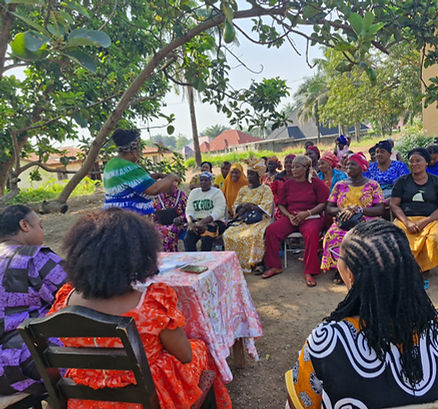
MAKENI, SIERRA LEONE – In a significant step toward local empowerment, the organization Grassroots Development for Social Inclusion and Poverty Relief (GDSIPR) recently hosted a vital consultative meeting with community members in Makeni. The gathering took place at the back of Arab Hospital, off Magburuka Highway, in the Bombali District of the Northern Province. Under the guiding motto, “A listening ear promotes action,” the meeting served as a platform for direct dialogue between the organisation and the people it serves.
During the event, Mary Nelson, the CEO of GDSIPR, addressed the attendees with a powerful message of hope and resilience. Speaking directly to the men and women of the district, she emphasized the organisation's unwavering commitment to uplifting every household. "We are here to listen and to build together," Nelson stated. "To the hardworking women and men of Makeni, I promise that our support is not just a temporary gesture but a long-term partnership. We are dedicated to providing the tools and resources necessary to break the cycle of poverty and ensure that social inclusion becomes a reality for every member of this community."
The impact of the meeting was deeply felt by those in attendance. Mabinty Kamara, a local community representative, expressed her profound gratitude for the initiative and the transparency of the leadership. "We truly appreciate this call to action and the opportunity to meet face-to-face with the GDSIPR team," Kamara shared. "Seeing such dedication gives us confidence in a bright future. With this level of support and genuine engagement, we are hopeful that our community will finally see the sustainable growth and prosperity we have long hoped for."
Alima: Leading the Way for Women’s Progress in Sierra Leone
In the heart of Sierra Leone, where communities have long navigated economic instability and social barriers, Alima stands as a beacon of hope. As the chairlady of her local women’s group, she has dedicated years to partnering with Grassroots Development, an organisation focused on empowering marginalised communities through practical, community-led solutions. For Alima, this work is not just a role—it is a promise to lift up the women who form the backbone of her society.
Sierra Leone’s economy is deeply rooted in agriculture, and Alima knows that this sector holds the key to sustainable livelihoods. Under her leadership, her women’s group has transformed fallow plots of land into productive farms, growing staple crops like rice, cassava, and vegetables that feed their families and generate income. She has also championed animal farming, introducing small-scale projects where women rear poultry, goats, and sheep. These initiatives do more than put food on tables; they create steady revenue streams, giving women financial independence they never thought possible. “When a woman farms, she doesn’t just grow crops—she grows opportunities for her children and her community,” Alima says.
Yet, potential often remains untapped without the means to expand. This is where business loans become critical. Alima has worked closely with Grassroots Development to advocate for accessible, low-interest financing tailored to women entrepreneurs. Many women in Sierra Leone lack collateral or formal credit histories, making it nearly impossible to secure funding from traditional banks. Through the partnerships she has built, dozens of women have received loans to purchase seeds, livestock, or equipment, or to start small businesses like food processing or textile production. These funds act as a catalyst, turning ideas into thriving enterprises that boost local economies.
But for Alima, empowerment goes beyond economics. It is about changing mindsets and breaking down social norms that have limited women’s roles for generations. Her group provides training in financial literacy, leadership, and rights education, helping women build the confidence to speak up in community meetings, make decisions for their families, and pursue leadership positions. She also addresses challenges like limited access to education and healthcare, recognizing that holistic support is essential for long-term change.
Despite the progress, significant needs remain. Climate change threatens farmlands with droughts and floods, and economic instability makes loan repayment difficult for some. Alima emphasises that continued support—from governments, international organisations, and private donors—is vital to scale these efforts. “We have the strength and the will,” she notes, “but we need partners who believe in us and can provide the resources to turn our hard work into lasting change.”
Through her unwavering commitment, Alima has shown that when women are supported, entire communities flourish. Her collaboration with Grassroots Development is a model of what can be achieved when local leadership meets strategic support, proving that in Sierra Leone, the future of progress is female.



Caption: From Addiction to Advocacy: How Grassroots Development is Transforming Youth Lives in Makeni Through Mental Health Support and Economic Empowerment
In Makeni, the capital of Bombali District in northern Sierra Leone, a silent crisis has gripped the youth population in recent years. At the heart of this crisis is Kush—a synthetic drug mixture, often containing dangerous chemicals and substances, which has spread rapidly across the country. According to local health authorities and community reports, Makeni has recorded some of the highest prevalence rates of drug abuse among young people aged 15 to 35. Surveys indicate that a significant percentage of youths in the area have experimented with or become dependent on Kush and other controlled substances, with many turning to drugs as a coping mechanism for unemployment, poverty, and unaddressed mental health challenges. The consequences are devastating: rising rates of mental illness, family breakdown, crime, and lost potential for an entire generation.
Against this backdrop, Grassroots Development, a local organisation dedicated to community-led progress, has stepped forward to tackle the issue from its roots. Recognising that drug abuse and mental health are deeply interconnected with economic hardship, the organisation has adopted a holistic approach that combines awareness, support, and opportunity.
Mohamed Kallay’s story is a powerful testament to what change looks like. Once trapped in the grip of Kush addiction, he faced the darkest moments of his life, losing his livelihood and the trust of his loved ones. But through his own resilience and the support of Grassroots Development’s programmes, he successfully recovered. Today, Kallay is no longer just a survivor—he is an ambassador, using his lived experience to speak to young people across Makeni. “I know what this drug does to you, because I lived it,” he says. “But I also know that recovery is possible, and there is a future waiting for us beyond addiction.” His voice carries weight, as he travels from neighbourhood to neighbourhood, sharing his journey and encouraging others to seek help.
Alieu Bangura is another young man whose life is taking a new direction. He recently participated in a two-day engagement workshop organised by Grassroots Development, which brought together youths, counsellors, and community leaders to discuss mental health, the dangers of drug abuse, and pathways to a better life. The sessions provided a safe space for open dialogue, where participants could speak freely about their struggles and receive professional guidance. Inspired by what he learned and the support he received, Bangura made a public commitment: “This workshop opened my eyes. I have decided to stop taking drugs and focus on building a life that I can be proud of.” His promise is not just a personal victory but a reflection of the impact that targeted community engagement can have.
Grassroots Development understands, however, that support and conversation are not enough. To create lasting change, the organisation is implementing concrete plans to address the economic vulnerability that often drives drug abuse. Central to these plans is the introduction of vocational training and financial support, with a focus on farming and small business setups. Agriculture is a backbone of Sierra Leone’s economy, and the organisation aims to equip young people with modern farming skills, from crop cultivation to livestock rearing, turning idle land into productive ventures. Additionally, training in entrepreneurship, financial management, and marketing will be offered, alongside small grants to help participants launch businesses ranging from retail shops to craft production. These initiatives are designed to provide not just income, but also a sense of purpose and dignity—powerful antidotes to addiction and despair.
Mental health support will run parallel to these economic programmes. Grassroots Development is working to integrate counselling services into its community centres, ensuring that youths have access to professional help as they navigate recovery and build their careers. By treating both the symptoms and the causes of the crisis, the organisation is building a framework where young people in Makeni can thrive, rather than just survive.
As Kallay, Bangura, and an increasing number of young people are proving, change is possible. With Grassroots Development leading the way, Makeni’s youth are being given the tools to turn their lives around—moving from addiction to advocacy, from unemployment to enterprise, and from despair to hope.
Article: Empowering Women Through Skills: Three-Day Soap-Making Workshop Concludes in Makeni
In a vibrant display of community-led development, a specialised three-day grassroots training program recently concluded in Makeni, bringing together 30 local women to master the art of artisanal soap production. This initiative marks a significant step in the ongoing effort to enhance female economic independence and alleviate poverty within the Northern Province.
Expert Leadership and Hands-on Learning
The training was led by Hawa Turay, a veteran entrepreneur and advocate for women’s vocational growth. As the lead trainer, Turay emphasised the power of self-reliance throughout the sessions. Addressing the participants, she shared words of encouragement:
"This is not just about making soap; it is about making a life for yourselves. You now hold the power to turn basic ingredients into a business. Do not let this knowledge sit idle—take it home, start small, and watch how your independence grows."
A Comprehensive Curriculum
Over the three days, the participants moved from theory to practical application:
• Day 1: Focused on the science of saponification and strict safety protocols.
• Day 2: Involved hands-on mixing and pouring of laundry and medicated soaps using locally sourced oils.
• Day 3: Concluded with vital business lessons on unit costing, branding, and the benefits of forming cooperatives.
Voice of the Beneficiaries
The impact of the workshop was echoed by the participants, many of whom see this as a turning point for their families. Balu Koroma, one of the beneficiaries, expressed her gratitude and her vision for the future.
"I am so happy to get this new skill," she said. "For a long time, I wanted a way to contribute more to my household. Now that I know how to produce quality soap, I am hoping for more support—especially with basic equipment and raw materials—to be able to go fully into production and reach the markets."
High Hopes for the Future
The training ended on a note of celebration and high hopes. The 30 participants left the venue not just with certificates, but with the confidence and "ready-to-work" skills necessary to launch their own micro-enterprises. By empowering women like Balu Koroma under the guidance of mentors like Hawa Turay, Makeni’s grassroots development movement continues to prove that local skills are the strongest foundation for national progress.
Grassroots Development: A Pathway to Social Inclusion and Poverty Relief in Sierra Leone
Since 2018, Sierra Leone has witnessed a transformative shift in its approach to national development, pivoting toward a model that prioritises grassroots initiatives to combat systemic poverty and social exclusion. Recognising that sustainable change must begin at the local level, this movement has focused on empowering the country’s most vulnerable populations through direct community engagement and targeted economic support.
The Foundation of Community Engagement
The journey began in 2018 with an emphasis on building trust and identifying the unique needs of local districts. By engaging directly with traditional leaders and community members, development programs moved away from "top-down" mandates. Instead, they fostered an environment where rural and peri-urban populations could take ownership of their own growth, ensuring that interventions were culturally relevant and locally supported.
Empowering Women and Youths
Central to this grassroots strategy has been the support for small groups of women and youths. These two demographics often face the highest barriers to financial independence and social participation. Key initiatives include:
• Micro-Granting and Savings: Providing small-scale capital to women’s cooperatives, allowing them to scale petty trading, agricultural processing, and craft production.
• Skills Acquisition: Vocational training for youths in sectors like renewable energy, construction, and digital literacy, bridging the gap between unemployment and the emerging labor market.
• Social Inclusion: By organising these groups into formal associations, the programs have given marginalised individuals a collective voice in local governance and decision-making processes.
Impact on Poverty Relief
The ripple effects of these grassroots efforts are evident in the gradual reduction of household poverty. When women are financially empowered, investments in child nutrition and education typically rise. Similarly, engaging youths in productive economic activities reduces social instability and fosters a sense of civic duty.
As Sierra Leone continues to navigate its developmental challenges, the success of the post-2018 grassroots model serves as a blueprint. It demonstrates that by investing in the potential of small community groups, the nation can build a more inclusive economy and a more resilient social fabric.
Grassroots Development Launches Food Bank to Combat Hunger in Makeni
Grassroots Development has officially launched a new food bank initiative aimed at providing essential nutritional support to community members facing severe food insecurity. Recognizing the growing economic challenges, the organization has stepped in to ensure that families in dire need have access to a consistent supply of healthy and culturally relevant staples.
The food bank provides a comprehensive range of essential items, including bulk carbohydrates like rice, cornmeal, gari, and pounded yam. To ensure families can prepare complete and nutritious meals, the distribution also includes:
• Proteins: Beans and chickpeas.
• Cooking Essentials: Vegetable oil, sugar, and salt.
• Fresh Produce & Flavor: Tomatoes, onions, curry, and various seasonings.
By offering these specific items, Grassroots Development aims to move beyond temporary relief, providing the ingredients necessary for families to maintain their dignity and health during difficult times. This initiative underscores the organization’s commitment to community welfare and its mission to ensure that no neighbor goes hungry.


